19 Long Hairstyles with Layers That Will Transform Your Look
Over the years, I have been learning all about the factors that determine whether or not a particular hairstyle would be practical in reality and not just look good in the salon mirrors in perfectly lit conditions on the day when you are not late.
That is exactly why I am able to share with you which of the long hairstyles with layers would look good and practical and which would just be a great-looking picture on the website.
So, what are the best long hairstyles with layers? Here, we go: curtain bangs with face-framing layers, butterfly layers to add volume, V-cut and U-cut layers for shape, and shag layers for texture. All of them work differently depending on your hair type and face shape.
Stay tuned because here come 19 layering hairstyles along with the mistakes to avoid.
Why Layers Are a Game-Changer for Long Hair
The one problem that long hair faces is being heavy and flat, as well as being rather dull because of its static nature. This is solved by layers, which not only remove the weight, but create shape and movement.
To help you understand why I love layers, imagine them as being different from a curtain to a waterfall. One stays still and another one flows. Layered hair creates such a flow, as it makes hair bounce, creates dimension and frames your face in a way blunt ends never can. It doesn’t matter whether you have thick, thin, curly or straight hair — there is a style for you.
1. Classic Long Layers
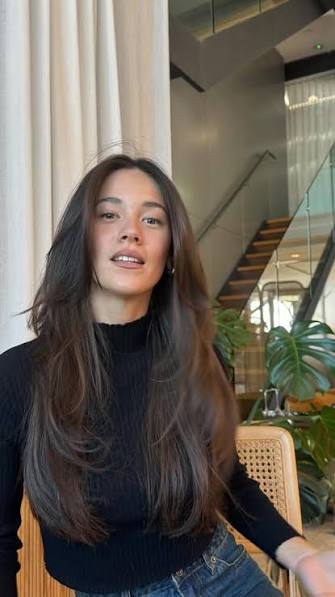
This is where it all began. Long layers are carefully evened throughout the length, from somewhere around the chin/collarbone downwards. It’s a very simple concept; the objective is to eliminate bulk and add movement, without really affecting the length of the hair too much.
Ideal for straight to wavy hair types and can work well with any face shape due to the fact that the layers are not that dramatic. If you feel like your hair looks heavy and lacks volume, this is your place to start. Ask your hairdresser for “long layers,” but don’t request a full layered haircut – you want to preserve length here and add movement. Light hold mousse and a round brush during blow-dry will give you that extra volume.
Now let us take a look at a hairstyle that has literally conquered Pinterest.
2. Curtain Bangs with Long Layers
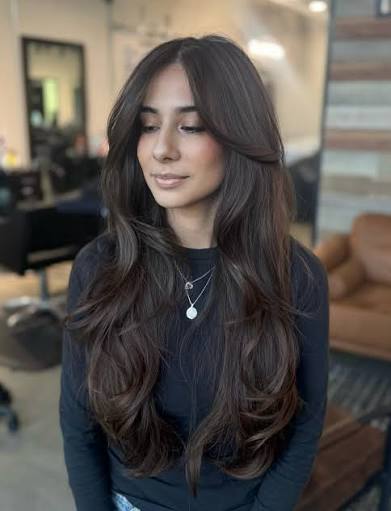
Curtain bangs paired with long layers are having a moment, and honestly, I get why. The bangs part down the middle and sweep back on both sides, framing your face like, well, curtains. Combined with long layers throughout, this cut softens angular features and adds instant face-framing dimension.
It goes great with round, square, and heart face shapes. Works well on fine and medium hair types, not very good on thick hair, as it tends to weigh down the bangs. The use of a round brush and heat protection spray is a must in this case – you need to blow-dry your bangs outward to create that effect.
If bangs aren’t your thing, don’t worry — this next one skips them entirely while still bringing serious volume.
3. Butterfly Layers
Butterfly layers are all about volume at the crown. The shortest layers sit near the top of the head and gradually lengthen as they move down, creating a shape that mimics — you guessed it — butterfly wings when your hair moves.
This technique is fantastic for thick or medium-density hair that needs shape without losing length. It’s less ideal for very fine hair, since the shorter top layers can look sparse. Ask for “money piece” layers combined with butterfly framing if you want extra face-framing dimension. Style with a volumizing mousse at the roots and loose curls for maximum bounce. This is the cut for anyone tired of hair that just falls flat by noon.
Now, if you want something edgier, this next style brings texture to the front.
4. Shag-Inspired Long Layers
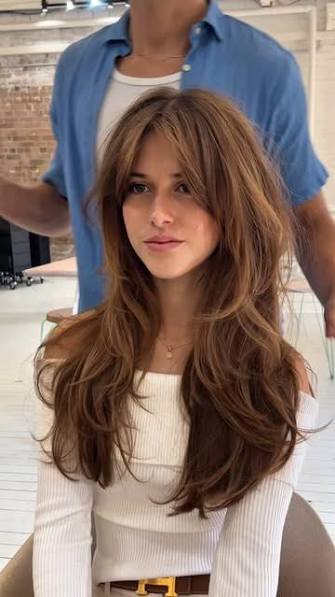
The shag is back, and long layers make it wearable for everyday life. This cut features choppy, textured layers throughout, often paired with wispy bangs. It’s messier by design — think rock-and-roll energy rather than polished perfection.
Shag layers work best on wavy or textured hair, since the choppiness enhances natural texture. Straight hair can pull this off too, but you’ll need a texturizing spray or salt spray to fake some grit. This style is ideal for casual, everyday wear and looks effortlessly cool without much daily effort. It’s a great low-maintenance option if you’re not a fan of strict styling routines.
Speaking of shape, let’s look at two layering techniques that are all about the ends.
5. V-Cut Layers
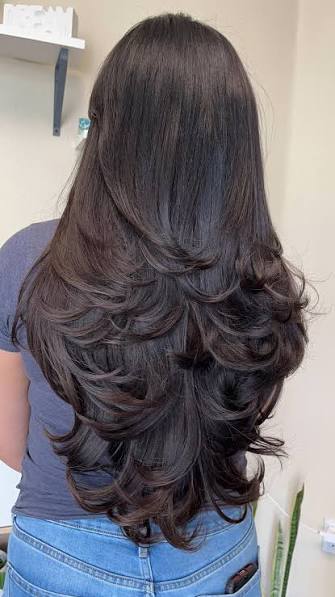
V-cut layers create a dramatic V shape at the ends of your hair, with the layers building up toward the center back. This adds serious volume and a sharp, structured silhouette when your hair is down.
This cut suits thick, straight, or slightly wavy hair the best, since the V shape shows up more clearly without a lot of frizz interfering. It’s a strong choice for special occasions or when you want your hair to make a statement. Blow-dry with a round brush, focusing on smoothing the ends so the V shape stays crisp. If your hair tends to look shapeless at the bottom, this fixes that instantly.
For something a little softer, the U-cut is the gentler cousin of this look.
6. U-Cut Layers
U-cut layers round off the ends instead of pointing them, creating a softer, more rounded silhouette. It’s subtler than the V-cut but still adds noticeable shape and volume.
This style works well on most hair types, including curly hair, since the rounded ends blend naturally with curl patterns. It’s a flexible option for both formal events and daily wear. A light curl cream helps define the ends without weighing them down. If you want structure without anything too bold, this is your sweet spot.
Next, let’s zoom in on the front of your face — because that’s where face-framing layers really shine.
7. Face-Framing Layers
Face-framing layers are shorter pieces cut around the front, starting near the cheekbones or jaw and blending into the rest of your long layers. They draw attention upward toward your eyes and cheekbones.
This technique flatters nearly every face shape but is especially great for round or square faces, since it creates the illusion of length. It works on straight, wavy, and curly hair alike. Ask your stylist to customize the length of the face-framing pieces based on your face shape — shorter pieces elongate, longer pieces soften. A flat iron or curling wand helps define these pieces for extra polish.
Now let’s talk color, because layers and color placement go hand in hand.
8. Long Layers with Balayage
Balayage and long layers are a classic pairing because the hand-painted color highlights the movement layers create. Lighter pieces catch the light as your layers shift and bounce, giving the whole look extra dimension.
This combo works on virtually any hair type but shows up best on hair with some texture — waves or loose curls let the color play peekaboo. It’s a fantastic low-maintenance color option since balayage grows out naturally without harsh lines. Use a color-safe shampoo and a UV-protectant spray to keep the color from fading too quickly.
If balayage feels like too much commitment, here’s a softer alternative.
9. Feathered 70s-Inspired Layers
Feathered layers bring back that iconic ’70s flip — soft, face-framing pieces that curve outward at the ends. It’s a nostalgic style that somehow always feels current again.
This look works best on medium to thick straight or wavy hair. A round brush and a medium-hold blowout spray help achieve that classic outward flip. It’s a great pick for date nights or retro-themed events, but it’s also totally wearable for daily life if you enjoy a little vintage flair.
Let’s move from styling technique to color placement with our next pick.
10. Long Layers with Money Piece Highlights
The “money piece” refers to bold highlights placed right at the front, framing the face. Paired with long layers, these highlights become even more noticeable since the layers keep bringing those pieces forward.
This works on any hair color base but pops especially on darker hair, where the contrast is more dramatic. It’s a striking choice for those who want a bold change without fully committing to an all-over color transformation. Touch-ups every 8–12 weeks keep it fresh.
Now let’s shift toward texture-driven styles, starting with everyone’s warm-weather favorite.
11. Beachy Wavy Layers
Beachy waves with long layers scream effortless summer hair. The layers enhance the wave pattern, creating movement that looks like you just walked off a beach (even if you just left your bathroom).
This style suits naturally wavy hair best, though straight hair can fake it with a texturizing spray and a curling wand set on a loose setting. It’s perfect for casual outings, vacations, or weekend brunches. Sea salt spray is your best friend here.
Next, let’s talk specifically about layering strategies based on hair thickness — starting with thick hair.
12. Long Layers for Thick Hair
Thick hair often feels heavy and hard to manage, and that’s exactly what long layers fix. Removing internal weight through strategic layering reduces bulk while keeping length intact.
This technique is a must for anyone with dense or coarse hair. A stylist will typically use slide-cutting or point-cutting techniques to thin out the internal layers without shortening the overall length. A lightweight serum keeps frizz at bay without adding extra weight.
On the flip side, fine hair needs a completely different approach.
13. Long Layers for Fine Hair
Fine hair benefits from fewer, well-placed layers rather than heavy layering throughout, which can make hair look thin and stringy. The key here is subtlety — long layers that add slight movement without removing too much density.
This works best when paired with a blunt cut at the very ends to create the illusion of thickness. Volumizing mousse applied at the roots, combined with a round brush blowout, gives fine hair the fullness it’s often missing.
Curly hair has its own unique layering needs too, so let’s cover that next.
14. Long Layers for Curly Hair
Curly hair and layers are a match made in heaven when done correctly. Layers help curls spring up rather than weigh down, giving shape and bounce that a blunt cut simply can’t achieve on curly textures.
This technique requires a stylist experienced in cutting curly hair dry, since curls behave differently than straight strands. A curl-defining cream and a diffuser attachment on your blow dryer bring out the best in this cut.
Bangs are another huge factor in how layers frame your face — let’s explore a side-swept option next.
15. Long Layers with Side-Swept Bangs
Side-swept bangs blended into long layers create a soft, romantic look that flatters nearly every face shape. Unlike full bangs, these blend seamlessly into the rest of your layered length.
This style suits straight and wavy hair particularly well. It’s versatile enough for the office, casual outings, or dressed-up occasions. A small round brush helps train the bangs to sweep in the desired direction during blow-drying.
Now let’s look at another color technique that pairs beautifully with layers.
16. Long Layers with Ombre
Ombre color gradually transitions from dark roots to lighter ends, and long layers amplify this effect by creating multiple points where the color shift becomes visible throughout the hair’s movement.
This combo works particularly well on hair that’s one solid length transitioning into layers near the mid-shaft. It’s lower maintenance than balayage since root touch-ups are needed less frequently.
Here’s a layering technique that hides in plain sight — literally.
17. Long Layers with Hidden Undercut
A hidden undercut combined with long layers on top creates major volume and texture without sacrificing length when your hair is down. The undercut layers are shorter and hidden underneath the top layer of hair.
This edgier technique suits thick hair especially well, since it reduces bulk from underneath. It’s a great choice for anyone wanting a secret edgy element to an otherwise classic long layered look.
Let’s wrap up our texture-based options with a hybrid style.
18. Long Layers with Blunt Ends
This style combines the movement of long layers throughout the mid-lengths with a blunt, straight-across cut at the very bottom. It gives the illusion of thickness at the ends while still incorporating layered movement higher up.
This technique is ideal for those who want the best of both worlds — layered volume without a wispy, thin-looking end result. It works on nearly all hair types and is a popular choice for those transitioning from a fully blunt cut into layers gradually.
And finally, let’s talk about a style tailored specifically to face shape.
19. Long Layers for Round Faces
This layering technique focuses layers starting at or below the chin, avoiding width at the cheeks and jaw. The goal is elongation rather than added fullness around the widest part of the face.
This works best with face-framing layers that start no higher than the chin. Combined with side-swept bangs or a deep side part, this cut visually slims round faces. It’s a smart pick for anyone who feels their round face gets emphasized by shorter or heavily layered cuts.
Long Hairstyles with Layers: Comparison by Face Shape
| Face Shape | Best Layer Style | Why It Works |
|---|---|---|
| Round | Long layers starting at chin | Elongates the face, avoids added width |
| Square | Face-framing layers | Softens angular jawline |
| Heart | Curtain bangs with layers | Balances wider forehead |
| Oval | Classic long layers | Nearly any style works well |
| Long | Butterfly layers | Adds width and volume at the sides |
Long Hairstyles with Layers: Comparison by Hair Type
| Hair Type | Recommended Layer Technique | Styling Tool Needed |
|---|---|---|
| Thick | Slide-cutting long layers | Lightweight serum, round brush |
| Fine | Subtle, minimal layering | Volumizing mousse |
| Curly | Dry-cut layers | Diffuser, curl cream |
| Wavy | Shag or beachy layers | Sea salt spray |
| Straight | V-cut or U-cut layers | Flat iron, heat protectant |
Tips for Success
- Bring reference photos to your appointment, but mention your hair’s natural texture so your stylist can adjust the technique accordingly.
- Ask about maintenance before committing — some layered cuts need trims every 6-8 weeks to keep their shape.
- Invest in a good heat protectant if you’re regularly blow-drying or curling your layers.
- Consider your face shape honestly, not just what looks good on Pinterest models with different bone structure.
- Communicate length preferences clearly — “long layers” can mean different things to different stylists.
Common Mistakes and How to Avoid Them
Mistake: Getting layers cut too short without discussing length retention.
Fix: Always specify you want to keep length and ask for layers to be blended gradually.
Mistake: Choosing heavy layering on fine hair.
Fix: Opt for minimal, well-placed layers instead of layering throughout.
Mistake: Skipping heat protectant when styling layered hair regularly.
Fix: Always apply a heat protectant spray before blow-drying or using hot tools.
Mistake: Not considering face shape before choosing face-framing layers.
Fix: Discuss your face shape with your stylist so the framing pieces actually flatter you.
Mistake: Expecting balayage or ombre to require zero maintenance.
Fix: Use color-safe products and schedule gentle toning appointments as needed.
Final Thoughts
There you have it — 19 long hairstyles with layers that cover pretty much every hair type, face shape, and lifestyle need you could think of. Whether you’re after subtle movement or a dramatic transformation, there’s a layering technique on this list that’ll work for you.
The best part? You don’t need to overhaul your entire look to see a difference. Sometimes a simple conversation with your stylist about long hairstyles with layers is all it takes to feel like your hair finally works with you instead of against you.