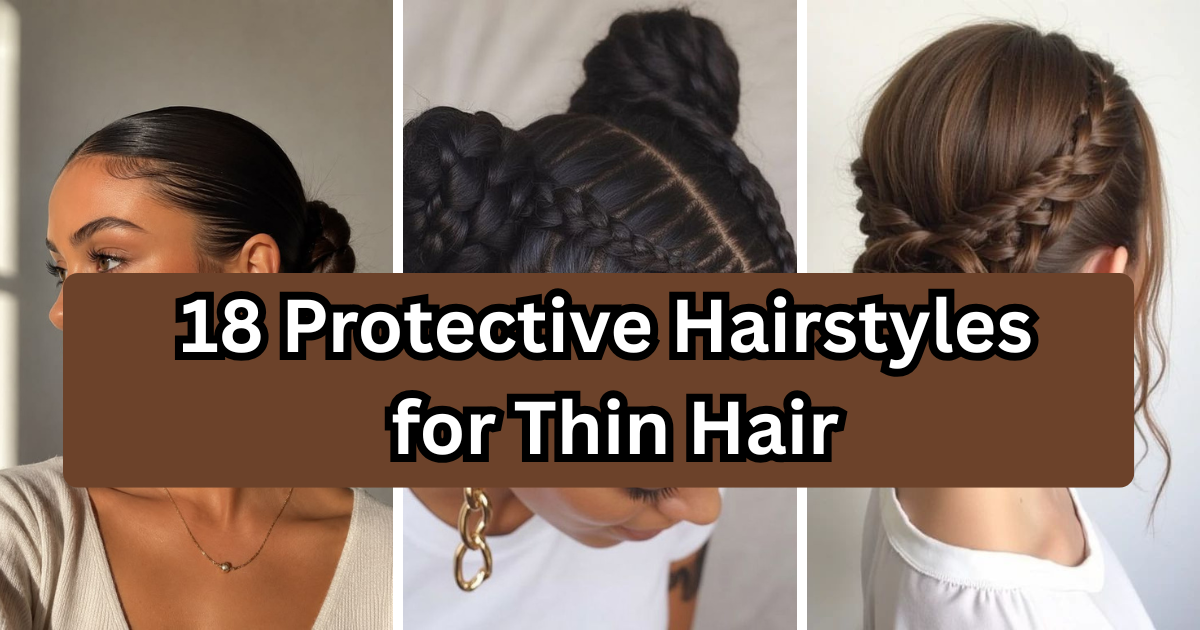
18 Protective Hairstyles for Thin Hair
Over the years, I have researched all kinds of hair matters starting from the porosity of hair and ending with the latest braiding styles that are popular in salons. All this research enables me to feel confident talking about protective hairstyles for thin hair, as this information is based on advice of stylists, techniques proven in practice, and real understanding of what thin hair needs.
What protective hairstyles for thin hair should one choose? The answer is very simple – low tension hairstyles including braided updos, twisted buns, silk wrap hairstyles, and loose braids since such hairstyles prevent hair breakage, avoid constant manipulations, and protect fragile ends from any friction and heat exposure.
However, there are some other facts that I am going to reveal. Stay tuned to learn how to choose the most suitable hairstyle for your hair and face shape and what things to avoid.
Why Protective Styling Works Wonders for Fine, Thin Hair
Have you ever wondered why your thin hair is fabulous in the morning and yet appears to be limp, tangled and translucent in the evening at 3pm? This happens because thin strands lack sufficient structural integrity compared to coarse hair strands, making them susceptible to breakages, frizz and damage due to regular combing, heating and tying of hair into a hairstyle using elastic bands.
Protective styles take care of all the problems mentioned above by hiding the ends of the hair and preventing excessive friction with the clothes as well as with pillow cases. The good thing about protective styles is that they are not only suitable for curly or natural hair, but also straight and wavy thin hair. Below you will find 18 examples of such styles.
1. Low Sleek Bun
A low sleek bun is an example of ultimate effortless hairstyle protection. All you need to do is gather your hair at the nape, use a boar-bristle brush to smooth out flyaways, then make a knot and pin it down with some bobby pins. This kind of a hairstyle looks good on fine and straight hair since the low placement doesn’t stretch the scalp, while smoothness conceals thinning at the crown of the head.
It will look perfect with both oval and heart-shaped faces – just add a couple of pieces to your face to tone down the sharpness of a square jawline. To control frizz, use some strong hold gel or edge control.
And finally, a twist on the traditional look with braids added.
2. Braided Crown (Halo Braid)
In the halo braid, the entire braid is secured around the head like a crown, leaving no ends visible. This is great for thin hair since the hair ends are the weakest parts of your hair, so when you keep them hidden, there will be no breakage due to the elements such as wind and collar as well as frequent handling.
Thin hair between medium and long works the best in this hairstyle. No matter if it is straight or curly hair; this braid is good for all hair types. Light braiding cream prevents frizz while adding weight to hair. Halo braid looks amazing at a formal party but to be honest, I also wear it to go grocery shopping.
Those who don’t like braids can always choose twists instead.
3. Two-Strand Twist Updo
Two-strand twists are lower-tension than braids, making them ideal for hair that’s thinning at the edges or prone to snapping. You twist two sections of hair around each other repeatedly, then pin the twists into a bun or pull them into a low ponytail.
This style is fantastic for curly and coily thin hair, since twists naturally define curl pattern while protecting length. Use a curl-defining cream or twisting butter to lock in moisture. It’s low-maintenance enough for a work week and can last 3–5 days with a satin scarf at night.
Speaking of low-maintenance, let’s talk about a braid that practically styles itself.
4. Loose French Braid
A loose French braid keeps things simple. Instead of pulling tightly at the scalp, you leave gaps between sections so tension stays minimal, crucial for anyone dealing with thinning edges or postpartum shedding.
Straight and wavy thin hair take to this style especially well, and it flatters nearly every face shape thanks to its soft, undone texture. A texturizing spray before braiding adds grip without stiffness. This is your go-to for casual days, brunch dates, or even a laid-back office look.
Now, if you want a style that doubles as heat protection, the silk-wrapped ponytail is next.
5. Silk Scarf Wrapped Ponytail
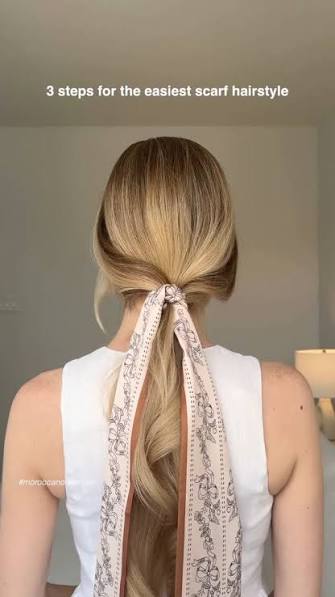
Wrapping a silk scarf around your ponytail’s base and length reduces friction from elastics and prevents the “ponytail dent” that snaps fine strands. Gather hair into a low or mid-height ponytail, secure with a snag-free elastic, then wind a silk or satin scarf around the tail.
This works for every hair texture and is especially great for hair with low porosity, since silk doesn’t strip moisture the way cotton does. It’s an easy weekday style, but tie a silky bow at the end and it’s suddenly date-night ready.
Chignons offer a slightly more polished version of this same protective logic.
6. Twisted Chignon

A twisted chignon is essentially a low bun with a spiral twist instead of a simple wrap. Section hair into two, twist each section, then coil them together at the nape and pin. The twisting motion distributes tension evenly, which is gentler on thin strands than a single tight knot.
This flatters round and oval faces particularly well and suits fine, straight-to-wavy hair. A shine serum adds polish without grease. It’s elegant enough for weddings yet simple enough for a Tuesday at the office.
For those with more textured hair, micro braids bring lightweight protection to the table.
7. Micro Braids Half-Up Style
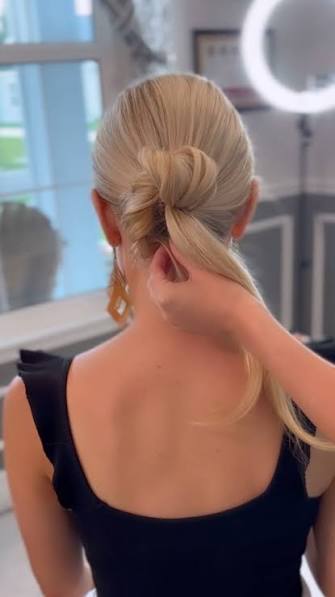
Micro braids are thin, tightly woven braids that distribute weight across many small sections rather than a few thick ones reducing strain on any single area of the scalp. Styling half of them up and leaving the rest down gives you protection without the commitment of a full braided head.
This works wonderfully for coily and curly thin hair, especially if you’re prone to breakage at the crown. Keep your scalp moisturized with a lightweight oil throughout wear. It’s a great transitional style between casual and dressed-up.
Pigtail braids offer a fun, youthful spin on the same protective principle.
8. Dutch Braid Pigtails
Two Dutch braids split the tension across your head evenly instead of concentrating it in one spot, which makes this a smart pick for thin hair prone to central part thinning. The braids sit close to the scalp, protecting strands from rubbing against clothing or bags.
Straight and wavy thin hair braid up nicely here, and the style suits heart and oval face shapes especially well. A bit of edge gel keeps baby hairs smooth. This one’s casual, sporty, and honestly a little bit fun.
Rope braids bring a slightly more grown-up texture to the same low-tension idea.
9. Rope Braid Bun
A rope braid twists two sections of hair together (instead of the usual three-strand weave) before coiling into a bun. The result looks intricate but causes far less tension than a traditional braid, which is why it’s such a solid pick for thinning hair.
This works on medium-to-long straight or wavy hair and looks especially elegant on square and oblong face shapes. Light-hold hairspray keeps it neat all day. Wear it to work, to a wedding, wherever — it’s endlessly versatile.
Flat twists take this protective concept even closer to the scalp.
10. Flat Twist Updo
Flat twists lie directly against the scalp, similar to cornrows but twisted instead of braided. This keeps hair completely off your face and shoulders, protecting it from friction all day long. Two or four flat twists pinned into a bun create a neat, long-lasting style.
Curly and coily thin hair benefit most here, since the technique defines texture while minimizing manipulation. Use a moisturizing twisting cream to prevent dryness at the root. It’s a fantastic protective option for gym days or long work weeks.
Bubble braids offer a trendier, more playful protective option next.
11. Bubble Braid Ponytail
Bubble braids use small elastics along a ponytail to create rounded “bubble” sections, which distributes tension across multiple points instead of one tight braid or bun. That’s genuinely gentler on fine strands than you’d expect from such a bold-looking style.
This works best on straight to wavy thin hair and flatters most face shapes thanks to its elongating effect. Use snag-free elastics to avoid unnecessary breakage. It’s playful enough for festivals, yet polished enough for a night out.
Pineapple updos bring similar low-manipulation logic to curly hair specifically.
12. Pineapple Updo
The pineapple updo gathers curls loosely at the crown using a scrunchie, preserving curl shape while keeping length protected from pillow friction — especially useful overnight. During the day, it also keeps hair off your neck and shoulders.
This is a curly and coily hair staple, and it suits round and oval faces beautifully since volume sits high on the head. A silk-lined scrunchie prevents breakage at the gather point. It’s casual, gym-friendly, and doubles as a nighttime protective style too.
If you want more length and volume temporarily, extensions might be your next move.
13. Braided Low Ponytail with Extensions
Adding clip-in or braided-in extensions to a low ponytail gives the illusion of thickness while your natural thin hair stays protected underneath, braided flat against the scalp. This technique is popular because it hides thinning areas while still letting your real hair rest.
Best suited for straight to wavy thin hair, this style works for nearly every face shape since the extensions can be cut to complement your features. A lightweight edge control smooths the base. It’s a favorite for weddings, photoshoots, and special events.
Space buns offer a similar volumizing illusion without the extensions.
14. Space Buns
Space buns split hair into two sections, each twisted or braided into a bun on either side of the head. Splitting the hair reduces the weight and tension on any single section, making this surprisingly gentle for such a bold look.
This style flatters heart and oval faces and works on straight, wavy, and curly thin hair alike. A texturizing spray helps buns hold shape without extra product buildup. It’s a fun, low-commitment style for festivals or casual weekends.
Cornrows take protective styling a step further into long-term wear territory.
15. Cornrow Braids into a Bun
Cornrows braided flat against the scalp and gathered into a bun offer serious longevity — this style can last a week or more with proper care. Because the braids lie flush against the head, there’s minimal friction and manipulation, which is exactly what thinning hair needs.
Curly and coily thin hair see the most benefit here, though straight hair with some texture spray can hold cornrows too. Keep the scalp moisturized daily with a lightweight oil. It’s a practical choice for busy weeks or vacations.
Crochet braids offer similar longevity with even less tension on your natural strands.
16. Crochet Braids (Lightweight Extensions)
Crochet braids involve looping extension hair through a cornrowed base using a crochet hook, meaning your natural hair stays braided and protected underneath the entire time. Choosing lightweight synthetic or human hair strands is key for thin hair, since heavy extensions can strain the scalp.
This works for coily, curly, and kinky thin hair especially well. Ask your stylist for a looser cornrow base to reduce tension further. It’s a long-term protective option — often lasting four to six weeks — great for anyone wanting a break from daily styling.
Wig installs take the “give your hair a break” idea to its fullest extent.
17. Wig Install with Braided Base
Wearing a wig over a cornrowed or flat-twisted base gives your natural hair a genuine rest period while still letting you change up your look daily. Since your real hair stays braided underneath, it’s shielded from heat, sun, and manipulation entirely.
This is ideal for anyone with significant thinning or those recovering from heat or chemical damage, regardless of original texture. Use a satin wig cap to prevent friction against your braided base. It’s a versatile option for special events, work, or simply hair recovery periods.
Finally, let’s end with a nighttime-to-daytime style that protects while you sleep.
18. Satin Bonnet Braid-Out Style
Braiding damp hair before bed and covering it with a satin bonnet overnight protects strands from friction while creating soft waves by morning. This is a two-in-one protective method — nighttime care plus a heat-free style.
Wavy and curly thin hair respond beautifully to this technique, and it suits every face shape since you control the braid size and resulting wave pattern. A leave-in conditioner before braiding boosts moisture retention. It’s perfect for casual days, work, or even soft, romantic evening looks.
Now that you’ve seen all 18 styles, here’s a side-by-side breakdown to help you pick the right one faster.
Protective Hairstyles at a Glance: Comparison Table
| Hairstyle | Best Hair Type | Styling Time | Maintenance Level | Best Occasion |
|---|---|---|---|---|
| Low Sleek Bun | Straight, fine | 10 min | Low | Work, formal |
| Braided Crown | Straight, wavy, curly | 20 min | Medium | Formal, wedding |
| Two-Strand Twist Updo | Curly, coily | 30 min | Medium | Casual, work |
| Loose French Braid | Straight, wavy | 10 min | Low | Casual |
| Silk Wrapped Ponytail | All types | 5 min | Low | Everyday |
| Twisted Chignon | Fine, wavy | 15 min | Low | Formal, work |
| Micro Braids Half-Up | Curly, coily | 45–60 min | Medium | Casual, dressy |
| Dutch Braid Pigtails | Straight, wavy | 15 min | Low | Casual |
| Rope Braid Bun | Straight, wavy | 15 min | Low | Work, formal |
| Flat Twist Updo | Curly, coily | 30 min | Medium | Work, casual |
| Bubble Braid Ponytail | Straight, wavy | 10 min | Low | Casual, party |
| Pineapple Updo | Curly, coily | 5 min | Low | Casual, night |
| Braided Ponytail w/ Extensions | All types | 30 min | Medium | Special events |
| Space Buns | All types | 10 min | Low | Casual |
| Cornrows into Bun | Curly, coily | 60 min | Low (long lasting) | Everyday, travel |
| Crochet Braids | Curly, coily | 90+ min | Low | Everyday, long-term |
| Wig Install | All types | 30–45 min | Low | Everyday, events |
| Satin Bonnet Braid-Out | Wavy, curly | Overnight | Low | Casual, evening |
Term Clarity: Know Your Protective Styling Basics
Protective Hairstyle
: A style that tucks away hair ends and minimizes daily manipulation to prevent breakage.
Low Manipulation
: Handling hair as little as possible during daily styling to reduce mechanical stress on strands.
Hair Porosity
: How well your hair absorbs and retains moisture — low porosity hair needs lighter, silk-based products; high porosity hair needs richer creams.
Two-Strand Twist
: Two sections of hair twisted around each other, often used as a gentler alternative to braiding.
Twist-Out
: The wavy or curly pattern left behind after unraveling a two-strand twist.
Tips for Success
- Moisturize before styling. Dry hair snaps more easily under tension, so apply a leave-in conditioner or lightweight oil first.
- Use snag-free accessories. Metal-free elastics and smooth-edged pins protect fragile strands from catching and breaking.
- Sleep on satin or silk. Cotton pillowcases pull moisture and cause friction overnight.
- Rotate your part. Constantly parting hair in the same spot stresses the same follicles repeatedly, which can worsen thinning.
- Give your scalp breaks. Even the gentlest protective style shouldn’t stay in for weeks on end without a wash day in between.
Common Mistakes and How to Avoid Them
Braiding too tight is probably the biggest offender. If your scalp feels tight or you see little bumps along the braid line, that’s tension damage in progress — loosen up next time. Another common slip-up is skipping moisture before styling; dry strands break far more easily under any kind of twist or braid.
People also tend to leave protective styles in too long, which sounds counterintuitive but buildup, dryness, and matting can actually cause more damage than the manipulation you were trying to avoid. Aim for one to two weeks max on braided styles, and check your scalp regularly.
Lastly, using the wrong products trips a lot of people up. Heavy butters can weigh down fine hair, while lightweight sprays won’t provide enough hold for coilier textures. Match your product to your actual hair porosity and texture, not just what’s trending online.
I know that’s a lot of information, but that’s kind of the point — thin hair deserves more than a generic list. Whether you land on a sleek low bun, a set of Dutch braid pigtails, or a full protective wig install, the right choice among these protective hairstyles for thin hair comes down to matching the technique to your texture, your face shape, and how much time you actually want to spend in front of the mirror. Pick one, try it this week, and watch your ends thank you for it.