20 French Bob Haircuts for Women That Actually Work in Real Life
From testing, researching, and styling dozens of different bobs, there is one conclusion I can draw without hesitation – French bob is not only about the style but also about an attitude change. Have you spent a good number of hours browsing through photos trying to decide whether this hairstyle is going to work for you or is only suitable for the models? You have come to the right place as I am sharing everything I know about cut techniques, styling tips, and facts that usually go unnoticed.
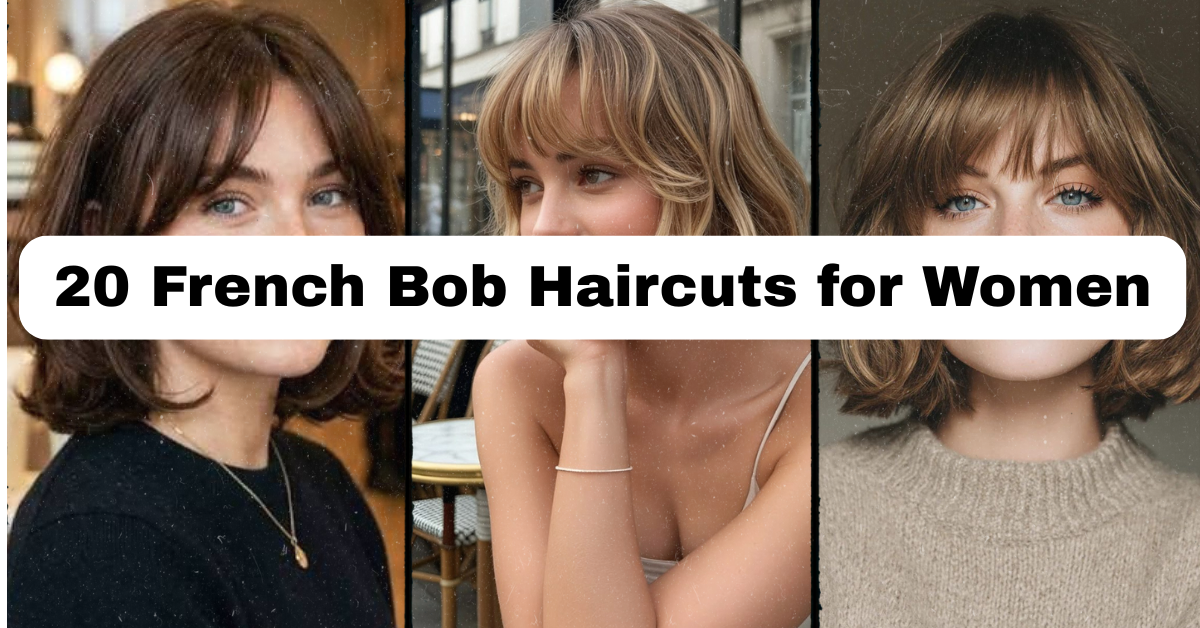
What do we mean by saying French bob? First of all, French bob is a chin-to-jaw-length haircut featuring blunt ends, little layering, and often accompanied by curtain bangs that make the style look effortless rather than perfect. This haircut is best suited for straight to wavy hair and works great for oval, heart, and square face shapes.
However, don’t put down the article yet as I am offering more than just a list of gorgeous pictures. I will show you which one of the hairstyles would be most appropriate for your hair type, amount of maintenance required for the styles, and mistakes that transform your chic French bob into a total regret.
What Makes a French Bob Different From a Regular Bob?
This is where the misconception comes in. A “bob” is a general term. A “French bob” is an attitude towards the haircut. Imagine effortless, just a bit messy, with a certain bohemian vibe—the kind you wake up with when you made sure you look like that on purpose. Classic bobs tend to focus on perfection, while French bobs focus on individuality.
A classical French bob starts at the chin line, ends in blunt cuts (without any feathering), and almost always includes a fringe that emphasizes and flatters your face by framing it in such a way that all the attention is drawn to your eyes. The effect it leaves is effortless elegance that suggests that you’re living in Paris and you’re trying as hard as you wish to.
Check out 20 of those styles right below to see which one works for you.
1. The Classic Blunt French Bob
This is the original, the one that started the whole obsession. Chin-length, blunt ends, minimal layers, and a straight-across cut that hits right at the jawline. It works beautifully on fine to medium hair because the blunt line creates the illusion of thickness. If you have naturally straight hair, this cut practically styles itself.
Styling-wise, this look requires only a bit of heat protection spray and a round brush blowout to achieve the flawless French-girl finish. This look is also totally perfect for curls or waves, but be ready for a somewhat different shape due to texture. This haircut is most flattering for oval or heart-shaped faces.
Up next, let’s talk about the bangs that make or break this whole category.
2. French Bob With Curtain Bangs
Curtain bangs are the unofficial mascot of the French bob movement. They part in the middle and sweep outward, framing the face like actual curtains pulled open. This combo works on nearly every face shape because the bangs can be customized, longer for round faces to elongate them, shorter for oval faces to add drama.
Fine hair benefits most here since curtain bangs add visual volume around the crown. You’ll want a small round brush and a light-hold mousse to keep the bend without stiffness. This is a low-maintenance option once you nail the blowout technique—most women can maintain it with a quick 5-minute refresh each morning.
If bangs feel intimidating, don’t worry. The next style eases you in without full commitment.
3. Wispy Fringe French Bob
Instead of full, blunt bangs, this version uses thin, piece-y wisps that graze the forehead. It’s a softer entry point for anyone nervous about committing to heavy fringe. Wispy bangs suit thick hair especially well because they naturally thin out a heavy hairline.
Texture spray is your best friend here—spritz it in, scrunch lightly, and let the pieces fall where they want. This cut reads casual and approachable, perfect for everyday wear, but it also photographs beautifully for events when you add a slight curl with a small iron. Square and long face shapes benefit most, since the wispy pieces break up strong forehead lines.
Now let’s go shorter, because some of you are ready to be bold.
4. The Micro French Bob
This is the shortest version of the cut—sitting just below the ear. It’s daring, it’s sharp, and it demands healthy hair since there’s zero room to hide damage. Thick, straight hair holds this shape the cleanest, though wavy hair gives it a fun, textured edge.
You’ll need a strong heat protectant and a flat iron for sleek styling, or a texturizing spray if you’re leaning into natural wave. This length works incredibly well for hot climates or anyone who’s tired of long styling routines. Oval and diamond face shapes carry this cut with the most balance, since shorter lengths can shorten the face if you’re not careful.
If short scares you, the next option offers a happy middle ground.
5. Longer French Bob (Lob-Inspired)
This variation stretches the bob down to collarbone length, blending French bob texture with lob (long bob) length. It’s the most versatile option on this list because it suits nearly every hair type—straight, wavy, and even loosely curly hair all take to this length well.
A texturizing cream applied to damp hair, followed by air-drying or a diffuser, gives you that lived-in look without much effort. This cut works for round, square, and heart face shapes since the extra length adds gentle elongation. It’s also the most forgiving for growing out or transitioning into shorter styles later.
Next, we’re adding color into the mix, because texture isn’t the only tool here.
6. Balayage French Bob
Balayage and French bobs are basically made for each other. The hand-painted highlights add dimension to a cut that’s otherwise simple in shape. This works exceptionally well on brunette bases, where caramel or honey balayage creates soft, sun-kissed movement without looking artificial.
Ask your colorist for face-framing balayage specifically, it brightens the areas around curtain bangs and cheekbones. Straight and wavy hair show off balayage most clearly, since the color needs movement to catch light properly. Maintenance-wise, balayage grows out gracefully, meaning fewer salon visits than traditional highlights.
Curious how this differs from ombre? Let’s clarify that next.
Balayage vs. Ombre: What’s the Real Difference?
| Technique | Placement | Best For | Maintenance |
|---|---|---|---|
| Balayage | Hand-painted, sun-kissed effect throughout | Natural, dimensional look | Low—grows out softly |
| Ombre | Gradual color shift, dark roots to light ends | Bold contrast seekers | Medium—line needs blending over time |
7. Ombre French Bob
Where balayage whispers, ombre speaks a little louder. This style transitions from a darker root to a noticeably lighter end, creating drama within a short haircut. It works best on thicker hair, where the color shift has enough surface area to show properly.
Because the bob is short, the ombre line sits closer to the roots than it would on longer hair, so talk to your colorist about adjusting the blend point. A leave-in glossing serum keeps the ends looking healthy, not brassy. This look suits anyone wanting a bold, statement style for special occasions, though it does require more root touch-ups than balayage.
Let’s shift from color to something texture-based next: waves.
8. Wavy French Bob
If your hair naturally waves, this cut celebrates it instead of fighting it. Blunt ends look completely different on wavy hair—less sharp, more tousled and romantic. This style is genuinely one of the lowest-maintenance options on this list for naturally wavy girls.
A sea salt spray applied to damp hair, scrunched and air-dried, brings out natural texture without frizz. Diamond and oval faces look especially balanced with this waved version, as the movement softens angular features. This is a wonderful choice for casual, everyday wear or laid-back weekend events.
But what if your hair curls tighter than a beachy wave? Let’s cover that.
9. Curly French Bob
Curly hair and French bobs might seem like an unlikely match, but it’s one of the most flattering combinations out there. The key is cutting curl-by-curl (a technique like DevaCut) so each curl bounces into its natural shape at bob length. This avoids the dreaded triangle effect some curly cuts create.
A curl cream applied on soaking wet hair, followed by air-drying or diffusing, keeps definition without frizz. Round and heart face shapes benefit from the width curls add near the jaw, balancing narrower chins. This is a fantastic low-manipulation style for curly-haired women tired of daily heat styling.
Now let’s talk about a bob variation built for thick, heavy hair.
10. Textured French Bob for Thick Hair
Thick hair often overwhelms a blunt bob, making it look bulky rather than sleek. This textured version uses point-cutting and thinning techniques to remove bulk while keeping the overall shape intact. It’s specifically designed to work with dense hair, not against it.
A lightweight texturizing paste (not oil, which weighs thick hair down) helps separate pieces for definition. This style suits square and oval faces particularly well, since the reduced bulk avoids adding extra width. It’s a smart pick for anyone whose thick hair currently feels heavy or hard to manage in a standard bob.
Fine hair has its own struggles too, so let’s address that next.
11. Voluminous French Bob for Fine Hair
Fine hair needs the opposite treatment—more structure, more visual density. This version keeps the ends blunt (no thinning shears here) to trick the eye into seeing fuller hair. Root-lifting spray and a round brush blowout add lift exactly where fine hair tends to fall flat.
A light dry shampoo at the roots between washes maintains volume without grease buildup. This style flatters round and oval faces, especially with curtain bangs added for extra frame. It’s ideal for anyone whose fine hair currently looks limp by midday, since the blunt weight line genuinely holds shape longer.
Let’s move into more editorial, event-ready versions next.
12. Sleek Glass-Hair French Bob
This is the ultra-polished, glossy version you see on red carpets and high-fashion editorials. Poker-straight, mirror-like shine, zero frizz—it’s a statement look built for formal occasions. Straight hair naturally achieves this easiest, though a flat iron can smooth wavy or curly textures temporarily.
A shine serum and a ceramic flat iron are non-negotiable tools here. This cut suits nearly any face shape since the sleekness itself is the focal point, not the shape. It’s a fantastic choice for weddings, galas, or any event where you want your hair looking deliberately, expensively simple.
For those who want drama without the sleekness, let’s talk shag-inspired texture.
13. Shaggy French Bob
This version borrows heavy layering and choppy ends from the shag family, blending it into French bob length. It’s edgier, more rock-and-roll than the classic polished version. Wavy and curly hair show off the shag layers most naturally, since the choppiness relies on texture to look intentional.
A texturizing spray scrunched through damp hair enhances the shaggy movement. Heart and oval faces balance well with this style, since the layers create movement around the jaw without adding heaviness. This is a great pick for anyone wanting an edgy, low-fuss everyday style that still looks put-together.
Next, let’s look at an asymmetrical twist on the classic shape.
14. Asymmetrical French Bob
Asymmetry adds instant visual interest—one side sits slightly longer than the other, creating a subtle, modern edge. This works particularly well on straight hair, where the clean lines of asymmetry show clearly. It’s a bolder choice, so it suits women who already feel confident experimenting with shape.
Styling requires precision—a flat iron for sleekness or a curling wand for soft asymmetrical waves. Square and round face shapes benefit most, since the uneven length draws the eye diagonally, softening angles. This cut works beautifully for both office settings and evening events, depending on how sleek or textured you style it.
Now, let’s bring in a retro-inspired variation.
15. Vintage Finger-Wave French Bob
This throwback style pairs the French bob’s blunt shape with 1920s-style finger waves. It’s a showstopper for special occasions—weddings, themed parties, editorial shoots. Straight to slightly wavy hair holds finger waves best, especially with a strong-hold setting gel.
You’ll need styling clips, a fine-tooth comb, and patience—this isn’t a five-minute style. Oval and heart face shapes look stunning with the wave pattern framing the cheekbones. It’s not an everyday look, but it’s worth learning for anyone who loves vintage glamour.
Let’s swing back to something more wearable for daily life.
16. Side-Parted French Bob
A simple side part completely changes the energy of a French bob, adding asymmetry without cutting the hair unevenly. This works for literally every hair type and texture, making it one of the most universally flattering adjustments on this list.
A deep side part specifically helps round and square faces since it creates a diagonal line across the forehead. Minimal product is needed—just a light hold spray to keep the part in place. This is the easiest style on this list to maintain day-to-day, since it requires no special tools beyond a comb.
Let’s contrast that with a middle-part version next.
17. Middle-Parted French Bob
Middle parts are having a major moment, and on a French bob, they create perfect, mirrored symmetry. This works best on oval and long face shapes, since the straight-down part can elongate already-balanced features nicely.
Wavy and straight hair both work well here, though curly hair may need extra product to keep the part from shifting throughout the day. A light-hold gel applied at the root keeps things tidy. This style feels effortlessly cool and works equally well for casual days and polished office looks.
Now, let’s look at a color technique that’s dominating salons right now: money piece highlights.
18. Money Piece French Bob
Money piece highlights—bright, face-framing streaks near the front—pair exceptionally well with French bob bangs, since the brightness draws attention directly to the eyes and cheekbones. This works on any base color but shows up most dramatically on medium-to-dark brunette hair.
Ask your colorist for a subtle lift near the bangs rather than a stark contrast, which tends to look more natural as it grows out. This suits round and heart face shapes especially well, brightening the narrowest part of the face. Low maintenance overall, though touch-ups every 8–10 weeks keep brightness fresh.
Let’s move to something structurally different: the stacked bob.
19. Stacked French Bob
Stacking adds extra volume specifically at the back of the head, creating a rounded, structured silhouette. This technique works best on straight, fine-to-medium hair, since the layers need to hold their shape without excess weight pulling them down.
A round brush blowout, working from the nape upward, builds the stacked shape properly. This cut flatters oval and heart face shapes, adding fullness where it’s needed most. It’s a smart choice for fine-haired women who feel like their hair “disappears” in a standard blunt cut.
Finally, let’s end with the most low-maintenance version of them all.
20. Air-Dried Natural Texture French Bob
This final style skips heat tools entirely, relying on natural texture—wavy, curly, or coily—air-dried with the right products. It’s the ultimate low-maintenance French bob, ideal for anyone tired of daily styling routines. Curl creams, diffusers on cool settings, and microfiber towels (not regular ones, which cause frizz) are the real tools here.
This works for every face shape since the natural texture softens any harsh lines automatically. It’s perfect for humid climates, busy mornings, or anyone embracing a wash-and-go lifestyle. Honestly, this might be the most underrated bob on this entire list.
Which French Bob Fits Your Face Shape? Quick Reference Table
| Face Shape | Best French Bob Styles | Avoid |
|---|---|---|
| Oval | Classic blunt, sleek glass-hair, side-parted | Nothing much—oval suits almost everything |
| Round | Longer lob-inspired, wispy fringe, money piece | Blunt chin-length with no layers |
| Square | Textured for thick hair, asymmetrical, wispy fringe | Micro bob without softening layers |
| Heart | Curtain bangs, curly bob, vintage finger-wave | Heavy blunt bangs with no movement |
| Diamond | Micro French bob, wavy bob | Middle part with no volume at crown |
| Long | Middle-parted, shaggy bob | Sleek styles with no width added |
Tips for Success
Getting a French bob to actually look good long-term isn’t just about the cut—it’s about the follow-through. Here’s what actually matters:
- Bring reference photos, but explain your hair type honestly. A photo of straight hair won’t translate the same way onto wavy or curly texture.
- Invest in a good heat protectant if you’re styling with hot tools regularly—bobs show damage fast since there’s less length to hide split ends.
- Trim every 6–8 weeks. Bobs grow out noticeably faster than longer cuts because the shape depends on precise length.
- Match your part to your face shape, not just what looks trendy. A middle part on a round face can widen it unintentionally.
- Use lightweight products on fine hair, richer creams on thick or curly hair. Product mismatch is the #1 reason bobs look either greasy or dry.
Common Mistakes and How to Avoid Them
term: Skipping the consultation
: definition: Walking in with just a photo and no conversation about your specific hair texture leads to a cut that looks nothing like the picture. Talk through your hair’s natural behavior first.
term: Choosing bangs without considering forehead size
: definition: Curtain bangs on a very short forehead can look cramped. Ask your stylist to customize length and thickness to your actual face proportions.
term: Overusing heat without protection
: definition: French bobs already sit at a shorter length, meaning damaged ends are much more visible. A heat protectant spray isn’t optional here.
term: Ignoring hair porosity
: definition: High-porosity hair absorbs product fast but loses moisture just as quickly, while low-porosity hair needs lighter products to avoid buildup. Knowing your porosity changes which styling products actually work for you.
term: Cutting too short too soon
: definition: If you’re unsure, start with a longer French bob (collarbone-length) and gradually go shorter over a few appointments rather than committing to a micro bob immediately.
Final Thoughts
At the end of the day, the French bob works because it bends toward you—your texture, your face shape, your daily routine—rather than forcing you into one rigid look. Whether you go blunt and classic or textured and undone, the right version of this cut can genuinely change how you feel walking into a room.
I hope this rundown of French bob haircuts gave you more than just pretty inspiration—hopefully it gave you the confidence to ask for exactly what your hair actually needs.