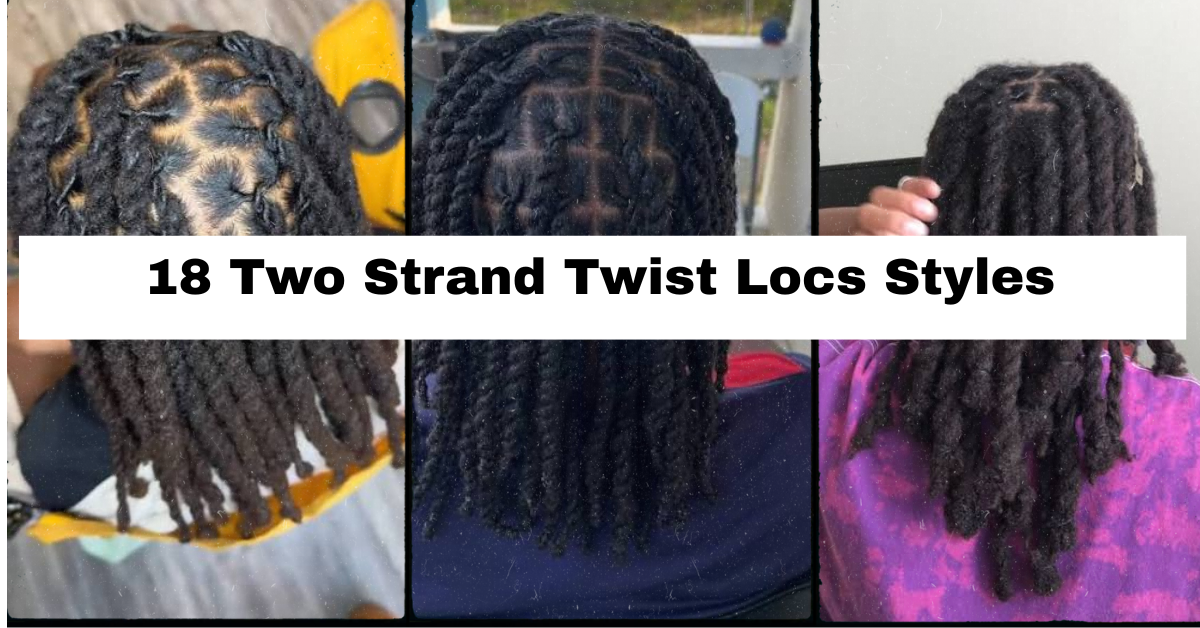
18 Two Strand Twist Locs Styles That Actually Work for Every Hair Type
Tried looking at 100 loc hairstyles but still have no idea which hairstyle would suit you? Then you’ve landed on this website in the right place. This is an actual guide of how to do two strand twist locs, not just another photo gallery. Based on my experience and information from various locticians, here are some of the best styles that will work for you in the long run.
So what are the best two strand twist locs styles? Some of the best two strand twist locs styles include chunky twist locs for thick hair, micro twist locs for a delicate look, freeform locs for low maintenance, and beaded locs. It depends on your hair texture and lifestyle.
Now stay tuned, as we are going to take a closer look at 18 different hairstyles using this technique, the most common errors that lead to premature loss of the hairstyle, and some additional tips you won’t hear from most hairstylists.
What Makes Two Strand Twist Locs Different
Okay, quick chat before we dive in. Two strand twist locs start with, well, two strands of hair twisted around each other instead of the interlocking or backcombing method. This technique gives you a cleaner, more defined look right from the start, and it’s usually gentler on your scalp during the early stages.
The magic happens over time. As your hair locks up naturally, those neat twists loosen into mature locs with their own texture and personality. Coarse, kinky hair tends to lock faster this way. Wavy or fine hair takes longer and might need more product to hold the twist while it sets.
Here’s the thing nobody tells you upfront: your starting hair texture basically writes the rulebook for which styles below will look effortless versus which ones will take extra patience. Keep that in mind as we go through each one.
1. Classic Two-Strand Twist Starter Locs
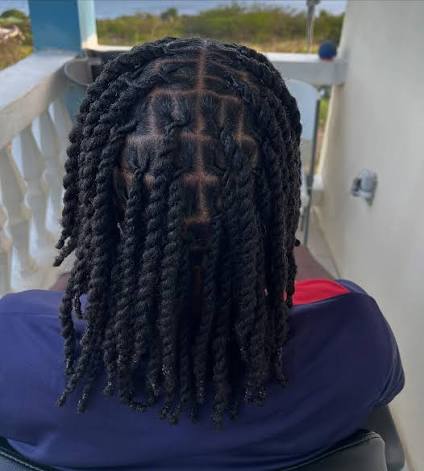
This is where almost everyone begins. Classic starter locs are neat, uniform, medium-width twists sectioned in clean squares or diamonds across the scalp. They look polished immediately, which is a huge win if you’re nervous about the “awkward stage” locs are famous for.
This style suits coarse, 4A-4C hair best since it grips and holds the twist without much slipping. Medium length (shoulder-grazing) works great for beginners. You’ll want a locking gel or twisting butter with light hold, nothing too heavy or it’ll cause buildup.
Maintenance is simple: retwist every 4-6 weeks. It’s office-appropriate, wedding-appropriate, basically everywhere-appropriate. Once you’ve got the classic down, freeform locs are a nice contrast if structure isn’t your thing.
2. Freeform Two-Strand Twist Locs
Freeform locs skip the strict parting and let your hair twist and lock in whatever direction it naturally wants to go. It’s the lowest-maintenance option on this entire list, honestly.
Any hair type can do freeform, though curlier textures lock faster without intervention. Length doesn’t matter much here, freeform looks intentional whether it’s cropped short or hanging past your shoulders. Skip heavy styling products; a light water-based moisturizer keeps the scalp healthy without forcing structure you’re trying to avoid.
This style is perfect for anyone who hates sitting in a salon chair for hours. It’s casual, artistic, and forgiving if your parts aren’t perfectly even. Next up, if you want more definition than freeform but still love texture, chunky twists deliver serious volume.
3. Chunky Two-Strand Twist Locs
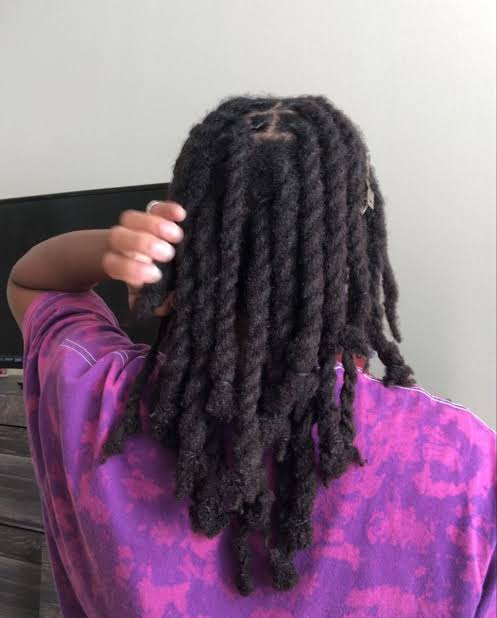
Chunky twists use larger sections of hair, which means fewer twists overall and a bolder, thicker finished look. They mature into statement-making locs with real presence.
Thick, dense hair is ideal for this style since there’s enough hair per section to create substantial twists without looking sparse. Round and oval face shapes both work well, though I’d recommend side-swept styling for square faces to soften angles. A strong-hold twisting cream is non-negotiable here — thin products won’t hold the weight.
Retwisting takes less time than smaller styles since there are fewer sections. Great for special events too, since chunky locs photograph beautifully in updos. Speaking of smaller alternatives, let’s flip to the opposite end of the spectrum.
Two Strand Twist Locs: Style Comparison by Hair Type & Maintenance
| Style | Best Hair Type | Maintenance Level | Retwist Frequency | Ideal Length |
|---|---|---|---|---|
| Classic Starter | Coarse/4A-4C | Medium | 4-6 weeks | Medium |
| Freeform | Any texture | Low | Rarely | Any |
| Chunky | Thick/Dense | Medium | 5-7 weeks | Medium-Long |
| Micro | Fine/Medium | High | 3-4 weeks | Long |
| Curly-Ends | Curly/Wavy | Medium | 4-5 weeks | Medium |
| Colored/Ombre | Any (pre-lightened) | High | 4-6 weeks | Medium-Long |
4. Micro Two-Strand Twist Locs
Micro twists use tiny sections, creating dozens (sometimes hundreds) of delicate, thin locs. The payoff is incredible movement and a softer overall silhouette.
Fine or medium-density hair actually benefits most from micro locs since thin sections won’t look thin — they look intentional. Long hair shows off micro twists best, though they take significant time to install (think hours, not minutes). Use a lightweight locking gel to avoid weighing down the fine strands.
Fair warning: retwisting is time-intensive because there are so many sections. This style shines for formal events and photoshoots because it holds intricate updos beautifully. If all that upkeep sounds like too much, curly-ends twists offer a softer, lower-fuss alternative.
5. Curly-Ends Two-Strand Twist Locs
This style keeps the twisted base but leaves the last inch or two curly and loose, creating a fun, textured tip instead of a blunt end.
Curly or wavy natural hair pairs perfectly here since the ends already have bounce built in. Works on medium to long locs and looks especially good on oval or heart-shaped faces where face-framing curls add softness. A curl-defining cream on just the ends (not the twisted portion) keeps the contrast crisp.
It’s a great in-between look — polished enough for work, playful enough for weekends. Maintenance-wise, just refresh the curly tips with water and cream between retwists. Now, if you want to make a bold statement, colored twists take things up a notch.
6. Ombre Two-Strand Twist Locs
Ombre twists gradually transition from your natural root color into a lighter or brighter shade toward the ends, creating dimension without a full-head dye job.
This works on any hair type, though pre-lightening is necessary before applying vibrant tones. Medium to long locs show off the gradient best. You’ll need a semi-permanent or demi-permanent dye formulated for locs, plus a color-safe locking spray to prevent fading.
It’s a striking option for creative workplaces or festivals where you want personality without commitment to full color. Touch-ups are needed as new growth comes in with your natural shade. Speaking of color, let’s go even bolder.
7. Colorful Two-Strand Twist Locs
Think burgundy, honey blonde, or even fantasy colors like teal woven through sections of twists. This style turns locs into a genuine style statement.
Any hair texture can carry color, but hair health matters most — over-processed or damaged strands won’t hold color evenly. Medium to long length gives color room to show. Deep-conditioning treatments before and after coloring are essential since bleach and dye dry out hair fast.
Best suited for special events, creative industries, or anyone who just loves standing out. Expect more maintenance: color-safe shampoo, UV protection spray, and quarterly touch-ups. Once your color’s set, try elevating things with an updo.
8. Two-Strand Twist Loc Updo
Gathering your locs into a high or low updo instantly transforms a casual style into something elegant. Think twisted buns, pinned styles, or wrapped configurations.
This works beautifully on medium to long locs — shorter locs may not have enough length to secure. Any face shape can pull this off; just adjust height (higher for round faces to elongate, lower for oval faces to balance). Use bobby pins, a soft hair tie, and light-hold edge control for baby hairs.
It’s the go-to for weddings, job interviews, or any formal event where you want a refined, put-together look. Half-up styles offer a nice middle ground if a full updo feels too formal for daily wear.
9. Half-Up Half-Down Two-Strand Twist Locs
This style pulls the top section of locs up into a ponytail, bun, or clip while leaving the rest down, giving you the best of both structured and relaxed looks.
Works on virtually any length past the shoulders, and any hair density. It’s especially flattering on square faces since the height softens angles. A silk scrunchie prevents breakage at the gathering point.
Great for everyday wear — school, work, casual outings. It keeps hair off your face without committing to a full updo. For something with a bit more personality, beaded twists add texture and sound (yes, sound — that satisfying clink).
10. Beaded Two-Strand Twist Locs
Adding wooden, metal, or acrylic beads to the ends of individual twists creates movement, sound, and a cultural nod to traditional twisting techniques.
Works on any loc length, though shorter locs show fewer beads per strand simply due to space. Beads work with all face shapes since they’re placed at the ends, away from the face. Make sure beads are lightweight — heavy beads stress the hair shaft and can cause breakage or loc thinning over time.
This is a fantastic option for vacations, cultural events, or anyone wanting playful texture. Just remove beads before sleeping to avoid tangling. Now let’s talk about pulling everything into one sleek shape: the ponytail.
11. Two-Strand Twist Loc Ponytail
A simple, high or low ponytail gathers all your locs into one clean silhouette. It’s deceptively versatile — dressy with accessories, casual without them.
Best on medium to long locs with enough length to gather comfortably. Works on all face shapes with height adjustments (high ponytails elongate round faces, low ponytails soften angular ones). A stretchy, seamless hair tie prevents snapping.
It’s a five-minute style perfect for gym days, errands, or dressing up with a wrap of hair around the base. The bun version below gives you an even more compact, low-maintenance option.
12. Two-Strand Twist Loc Bun
Wrapping your gathered locs into a bun creates a neat, contained style that works from the office to the gym.
Medium to long locs wrap most easily; very long locs may need a double wrap for a fuller bun shape. Works well on oval, heart, and round faces. Light-hold gel smooths edges without leaving flakes once dry.
It’s arguably the lowest-effort “dressed up” style on this list. Bonus: it keeps locs protected from friction against clothing or bedding. If you want something edgier, shaved-side styles create serious contrast.
13. Shaved-Side Two-Strand Twist Locs
Shaving one or both sides while keeping length on top creates dramatic contrast and shows off twist detail up top even more.
Works best on medium-to-thick hair density since thinner hair on top may look sparse against the shaved sides. This style suits round and oval faces particularly well since it adds visual structure. Regular touch-ups (every 2-3 weeks) at the barber keep the shaved sides crisp.
It’s a bold, edgy choice popular in creative and music industries. Definitely a commitment style — but a stunning one. For something a little softer and shorter overall, the bob-length twist might be your next favorite.
14. Bob-Length Two-Strand Twist Locs
Cutting locs to a chin or shoulder-length bob creates a modern, low-maintenance silhouette that still shows off loc texture.
Works on any hair type, though thicker hair gives the bob more visible fullness. Flattering on nearly every face shape since length can be adjusted (slightly longer in front for round faces, blunt all around for oval faces). Minimal product needed — just a light shine spray.
This is ideal for anyone wanting locs without the long-term length commitment. It’s cooler in summer too, less weight on the scalp. Speaking of styling flair, let’s talk accessories.
15. Two-Strand Twist Locs with Gold Cuffs & Accessories
Metal cuffs, wraps, and charms slide onto individual locs, adding shine and personal flair without any cutting or coloring involved.
Works on any loc length or texture since accessories simply slide onto existing locs. Best on locs at least a few inches long so the cuff has room to sit securely. No special products needed — just properly sized cuffs (too tight can cause breakage over time).
Perfect for adding personality to any existing style, from everyday looks to special occasions. Easy to swap out for different moods. If you’re not ready for permanent locs yet, faux twist locs let you test the waters.
16. Faux Two-Strand Twist Locs
Faux locs use synthetic or human hair extensions wrapped or twisted onto your natural hair, mimicking mature locs without the months of waiting.
Works on any natural hair type or length since extensions do the heavy lifting. Great for all face shapes depending on install length and thickness chosen. A protective edge gel and light oil at installation keep your natural hair underneath healthy.
This is the ultimate commitment-free option — test different colors, lengths, and thicknesses before deciding if permanent locs are right for you. Great for special events or simply experimenting. For those already deep into their loc journey, longer lengths bring their own rewards.
17. Long Waist-Length Two-Strand Twist Locs
Years of growth pay off with long, waist-length locs that carry serious visual weight and versatility for styling.
Any hair type can reach this length with patience and proper care. Thicker locs handle length better without excessive thinning at the root. A weekly deep moisturizing treatment prevents dryness, since ends are furthest from natural scalp oils.
This length allows for elaborate updos, half-up styles, or simply wearing them down for dramatic effect. It’s a beautiful reward for years of consistent maintenance. Finally, let’s finish with a softer, face-framing option.
18. Two-Strand Twist Locs with Fringe or Bangs
Leaving a section of twists at the front to hang as bangs or a side-swept fringe softens the whole look and frames the face.
Works on any hair density, though thicker sections create fuller-looking bangs. Particularly flattering on square or long face shapes since fringe adds width and softens the forehead area. A light pomade keeps the fringe smooth without frizz.
This style updates a classic loc look instantly, adding a face-framing element that feels fresh and modern. It works for nearly any occasion, from casual to formal.
Styling Time & Product Needs at a Glance
| Style Category | Avg. Install Time | Key Product | Skill Level Needed |
|---|---|---|---|
| Classic/Freeform | 2-4 hours | Locking gel | Beginner-friendly |
| Chunky | 1-3 hours | Twisting butter | Beginner |
| Micro | 6-10+ hours | Lightweight gel | Advanced/Stylist |
| Colored/Ombre | 4-6 hours (plus color time) | Color-safe locking spray | Stylist recommended |
| Faux Locs | 3-6 hours | Edge gel, oil | Beginner-Intermediate |
Tips for Success
Getting two strand twist locs to look good long-term isn’t just about the initial install. A few habits make a huge difference:
- Moisturize weekly using a water-based spray, not just oil, since oil alone won’t penetrate dry strands.
- Sleep with a satin or silk scarf to reduce frizz and protect your edges.
- Avoid over-washing early on — twice a month is plenty during the first few months.
- Palm-roll twists gently between washes to maintain shape without adding tension.
- Trust the process during the “awkward stage” around months 3-6; it’s temporary.
Common Mistakes and How to Avoid Them
Even experienced loc-wearers slip up sometimes. Here’s what to watch for:
Using too much product
: Heavy gels and butters cause buildup, which leads to dryness and even mold in severe cases. Stick to a dime-sized amount per section.
Twisting too tightly
: This causes tension alopecia at the hairline. Twists should be snug, not painful.
Skipping regular trims
: Thin, weak ends should be trimmed occasionally to prevent breakage from traveling up the loc.
Retwisting too often
: Weekly retwisting thins hair over time. Stick to a 4-6 week schedule unless your stylist advises otherwise.
Ignoring scalp health
: A dry, flaky scalp under locs often gets ignored. Use a diluted tea tree oil rinse occasionally to keep things clean and irritation-free.
Wrapping It Up
There you have it — 18 real, wearable two strand twist locs styles, from the low-fuss freeform look to bold colored twists and everything in between. Whatever your hair type, length, or lifestyle, there’s a version here that fits your life instead of fighting it. Pick one, show it to your stylist, and give your hair the style it deserves.