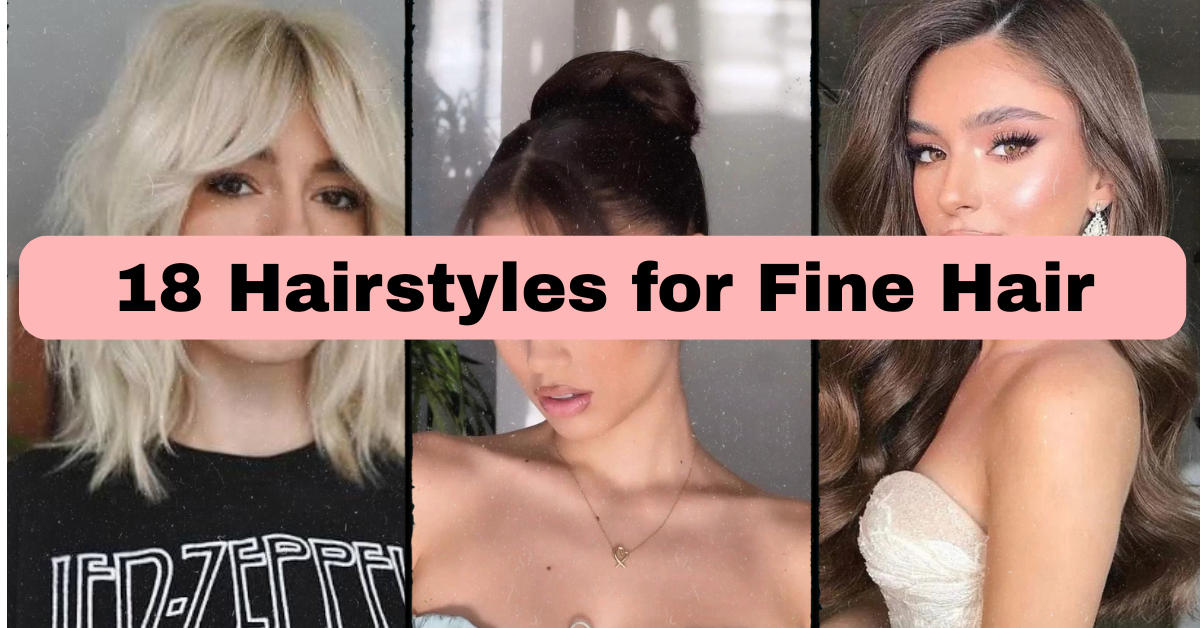
18 Hairstyles for Fine Hair That Actually Add Volume
If your hair is fine, you know how tough life can be. Flattened roots come early in the afternoon. An annoying amount of static cling. Hairstyles that appear full when you look into the mirror at home but end up appearing flat by the time lunch arrives. I have experimented over years with different hairstyles and tips to style fine hair, and I am going to show you those tips and hairstyles that really work.
What are the best hairstyles for fine hair then? The best hairstyles for fine hair include textured bob, curtain bangs, long layers, and low maintenance hairstyles such as messy bun and braided crown, which all create an illusion of thickness using a combination of layered cuts, angles and proper styling tips.
Continue reading, because there will be 18 best hairstyles for fine hair discussed along with the exact tools and products needed to make those hairstyles last throughout the day.
Understanding Fine Hair Before You Pick a Style
Now, before we dive right into our styling techniques, there is an important difference to make. Fine hair is different from thin hair, because fine hair describes the size of the strand itself, while thin hair is a description of density. You could have fine but dense hair or fine and thin hair, and both will require a different styling method.
Strands that are finer also tend to have less problems with hair porosity on the cuticle level, so fine hair tends to get overloaded with hair care products quickly. This is why all of the styles below come with instructions for choosing the right products.
1. Long Layers with Face-Framing Pieces
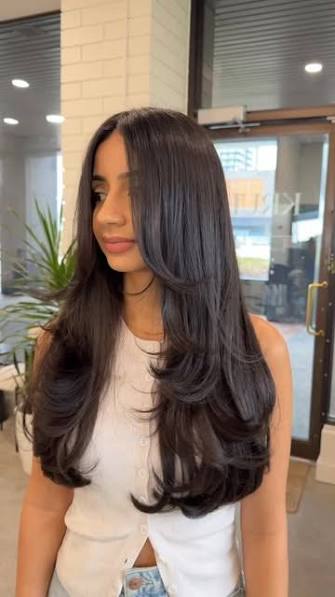
Long layers are the single most requested cut for fine hair, and for good reason. Removing weight from the ends without cutting length allows movement and bounce that a blunt cut just can’t give you. The face-framing pieces, cut shorter around the cheekbones, add dimension and draw attention upward, away from any thinness at the crown.
This works beautifully on oval, heart, and square face shapes. Ask your stylist for point-cutting rather than a straight-across trim; it softens the ends so hair doesn’t look see-through. Use a lightweight volumizing mousse at the roots, then diffuse-dry upside down. It’s office-appropriate, date-night ready, and holds up through humid days better than one-length hair ever will.
Next up, a cut that solves volume problems at the source: the blunt bob.
2. The Classic Blunt Bob

Here’s the truth: cutting fine hair shorter almost always makes it look thicker. The blunt bob works because it creates one solid, weighted line — no wispy ends thinning out the visual density. Hit at the chin or just below, this cut relies on precision rather than layers.
Round and oval faces suit this shape especially well. Straight, fine hair holds the blunt line cleanest, though a slight bend from a 1-inch curling iron adds texture without sacrificing the silhouette. Use a root-lifting spray before blow-drying with a round brush. This is a low-maintenance, high-impact choice, great for work, and it photographs incredibly well for events.
If you want even less daily styling, the pixie cut deserves a serious look.
3. Textured Pixie Cut
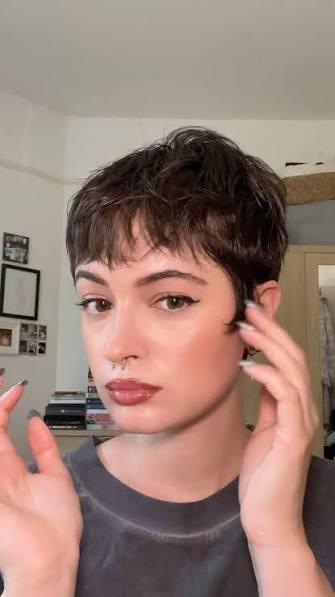
A pixie cut strips away excess weight entirely, which is exactly what fine hair needs to stand up and stay full. Texturizing scissors at the crown create tiny layers that fight gravity instead of surrendering to it. This is one of the lowest-maintenance options on this entire list.
Heart, oval, and diamond face shapes tend to look striking in a pixie. Apply a pea-sized amount of texturizing paste to damp hair, then blow-dry with your fingers, lifting at the roots as you go. It’s perfect for gym days, work, and travel because there’s genuinely nothing to “ruin.” The tradeoff? You’ll need trims every 4–6 weeks to maintain the shape.
Now let’s talk about a cut that’s having a major comeback: the shag.
4. Shag Haircut with Curtain Bangs
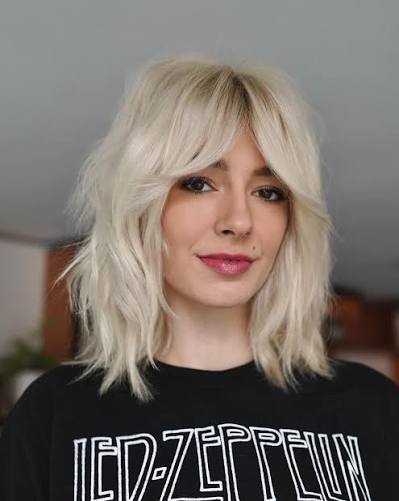
The shag is layers on top of layers, and on fine hair, it creates incredible texture without needing a curling iron every single day. Paired with curtain bangs, parted down the middle and swept to frame each side of the face, this cut softens features and adds instant movement.
Square and long face shapes benefit most from the curtain bang’s softening effect. This style works on straight or slightly wavy fine hair; use a texturizing spray (not a heavy cream) to keep the shaggy pieces separated instead of clumped. It transitions easily from casual weekends to creative work environments.
Next, let’s slow things down with a smoother, sleeker option: waves with root volume.
5. Beach Waves with Root Volume
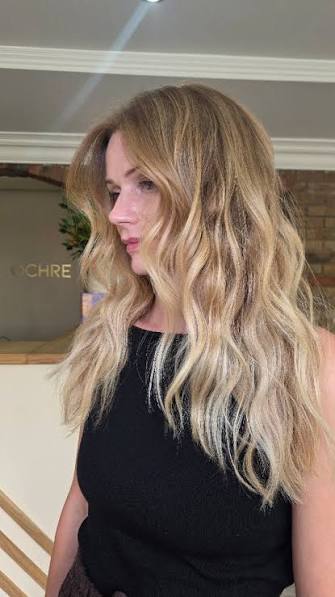
Beachy waves look effortless, but on fine hair, they need a specific approach to avoid looking limp. The trick is building volume at the root before you ever pick up a curling wand. Blow-dry with a round brush lifting straight up at the roots, then use a 1-inch wand on 1-inch sections, alternating curl direction.
This style flatters nearly every face shape because the waves fall naturally around the jawline. It’s ideal for special events, weddings, or date nights. Finish with a texturizing sea-salt spray, but go light, since too much product weighs fine strands down fast.
From loose waves, let’s move to something a little more polished: the sleek high bun.
6. Sleek High Bun
A high bun looks deceptively simple, but on fine hair, it needs backcombing at the crown before you pull hair up. Otherwise, it looks flat and stringy instead of sleek and intentional. Teasing the roots first, then smoothing the top layer over it, gives you that polished-yet-full look.
This works for round, oval, and heart face shapes especially well since it exposes the jawline. It’s a go-to for formal events, job interviews, and hot summer days. Use a strong-hold gel on the front hairline to control flyaways, and finish with light-hold hairspray — heavy hairspray can make fine hair look greasy.
Let’s dial back the formality with a braid that works for literally any day of the week.
7. French Braid Crown
A braided crown solves two fine-hair problems at once: it hides a flat crown and keeps hair off your face all day. Starting the French braid at the temple and working it around the head creates the illusion of a fuller hairline without extensions or clip-ins.
This style suits every face shape and works on second-day hair especially well, since a little natural oil helps the braid hold. It’s a great choice for festivals, brunch, or even work if you keep it polished. Use a texturizing spray on dry hair before braiding — freshly washed, slippery hair makes braiding fine strands frustrating.
Now, let’s look at bangs again, but a different variety: wispy bangs.
8. Wispy Bangs with Long Layers
Wispy bangs are cut with a razor or texturizing shears so they’re feathered rather than blunt. On fine hair, this matters a lot — blunt bangs can look like a solid, flat curtain, while wispy bangs move and blend with the rest of the layers.
Oval, square, and heart face shapes all work well with this fringe style. Pair it with long layers throughout for cohesive movement. Style with a small round brush, blow-drying the bangs slightly off to the side rather than straight down. This is a versatile, everyday-friendly look suitable for work and casual outings alike.
Let’s shift to updos again with a style built specifically for second-day hair: the half-up twist.
9. Half-Up Half-Down with Twists
This style keeps hair out of your face while still showing off length — a nice middle ground for fine hair that looks stringy when fully down but flat when fully up. Two small sections twisted back from each temple and pinned at the crown add subtle texture and lift.
It works on any face shape and any fine hair texture, wavy or straight. Great for work, school pickup, or casual dinners. Backcomb the crown slightly before securing the twists for extra volume. It’s genuinely a five-minute style once you get the technique down.
Next, let’s go bigger with a cut that maximizes body from root to tip.
10. Voluminous Blowout
A classic blowout, done right, is one of the most transformative things you can do for fine hair. The technique matters more than the cut here — sectioning hair into layers, drying each section with tension using a round brush, and always drying roots first, then mid-lengths, then ends.
This suits every face shape since it’s customizable to the finish you want. It’s ideal for special occasions, job interviews, or any day you want your hair to look 20% thicker. Use a heat protectant and a lightweight volumizing spray at the roots — skip heavy oils until after the style is complete.
From full-volume blowouts, let’s move to something with more edge: side-swept waves.
11. Side-Swept Waves
Side-swept waves push all the volume and movement to one side, creating an asymmetrical, elegant look. This works particularly well for fine hair because the deep side part naturally lifts the roots on the heavier side.
Heart and round face shapes benefit most from this asymmetry. It’s a favorite for weddings, proms, and formal dinners. Curl hair away from the face in 1-inch sections, then brush through gently with a paddle brush to loosen the curls into soft waves. Finish with a flexible-hold hairspray to maintain movement without stiffness.
Let’s talk about a length that’s trending hard right now: the textured lob.
12. Textured Long Bob (Lob)
The lob — a long bob hitting around the collarbone — offers more versatility than a shorter bob while still creating the thickness illusion fine hair needs. Adding light layers and point-cutting at the ends prevents that “triangle” shape fine hair sometimes falls into as it grows out.
This length flatters oval, square, and heart face shapes. It works for both straight and wavy textures. Style with a flat iron for sleek, polished days, or a wand for texture on weekends. It’s office-friendly, transitions well to evening events, and requires trims roughly every 8–10 weeks.
Now for something a bit more playful and youthful: space buns.
13. Space Buns
Space buns — two buns positioned high on either side of the part — are having a real moment, and they’re surprisingly practical for fine hair. Splitting hair into two sections distributes volume evenly, so neither bun looks skimpy the way one large bun sometimes can on fine strands.
This style works on any face shape and is best suited to casual outings, festivals, or workout days. Backcomb each section before securing for extra body. Use a strong-hold elastic, since fine hair slips out of buns more easily than thicker hair.
Let’s bring things back to elegance with the low chignon.
14. Low Chignon
A chignon sits low at the nape of the neck, and it’s a timeless choice for fine hair because the twisted, tucked shape naturally creates volume through strategic pinning rather than relying on hair thickness alone.
This suits oval and heart face shapes especially well, elongating the neckline. It’s a classic choice for weddings, black-tie events, or professional settings. Tease the crown before pulling hair back, and use bobby pins liberally — fine hair slips more than other textures, so extra pins prevent slippage throughout the day.
From formal updos, let’s return to something you can wear on repeat: curtain bangs with long layers.
15. Curtain Bangs with Long Layers
I mentioned curtain bangs earlier with the shag, but paired with simple long layers (no shag texture), this becomes a completely different, softer look. The bangs part in the middle and blend seamlessly into face-framing layers, creating movement without heavy layering throughout.
This flatters square, long, and heart-shaped faces by softening angular features. It suits straight or wavy fine hair equally well. Style with a round brush, rolling the bangs under and back for a soft, blended finish. It’s a low-maintenance, everyday-appropriate style that still looks intentional for work or casual events.
Let’s move into braided territory with a slightly more intricate option: the braided half-up style.
16. Braided Half-Up Style
This one takes the half-up concept further with a small braid woven from each side, meeting at the back of the head. It’s more decorative than a simple twist and adds textural interest that fine hair often lacks on its own.
Works well for oval, round, and heart face shapes. Great for casual weekend outings, brunches, or even as a boho-inspired look for outdoor events. Use a texturizing spray before braiding to give the strands enough grip — freshly washed fine hair is often too slippery to braid neatly.
Let’s close out the updo section with something structured and modern: the A-line bob.
17. A-Line Bob
An A-line bob is shorter in the back and gradually longer toward the front, creating a sharp, graphic silhouette. This angle naturally lifts the back of the hair away from the head, solving the flat-crown problem fine hair is famous for.
This cut flatters round and square face shapes by adding definition along the jaw. It works best on straight fine hair, though slight waves can add nice texture. Style with a flat iron for the sharpest line, using a light shine serum to finish — never a heavy oil, which will collapse the shape.
Finally, let’s finish with a style that ties everything together: the low ponytail with volume.
18. Low Ponytail with Crown Volume
A low ponytail seems basic, but done correctly, it’s one of the most flattering options for fine hair. The secret is backcombing the crown section before smoothing hair back and securing it low at the nape — this single step is what separates a flat ponytail from a full, polished one.
This suits every face shape and is appropriate for work, dinners, or even semi-formal events. Wrap a small section of hair around the elastic to hide it for a more finished look. Finish with a light-hold shine spray to smooth flyaways without weighing down the crown volume you just created.
Hairstyles by Occasion, Length, and Maintenance Level
| Hairstyle | Best For | Hair Length Needed | Maintenance Level | Styling Time |
|---|---|---|---|---|
| Long Layers | Casual, Work | Mid-length to long | Low | 10–15 min |
| Blunt Bob | Work, Events | Chin to shoulder | Low | 10 min |
| Textured Pixie | Casual, Travel | Short | Low | 5 min |
| Shag + Curtain Bangs | Casual, Creative work | Mid-length to long | Medium | 15–20 min |
| Beach Waves | Date night, Events | Shoulder to long | Medium | 20–25 min |
| Sleek High Bun | Formal, Interviews | Shoulder length+ | Medium | 10–15 min |
| French Braid Crown | Everyday, Festivals | Shoulder length+ | Low | 10 min |
| Wispy Bangs | Everyday, Work | Any length | Medium | 10 min |
| Half-Up Twists | Everyday, School run | Shoulder length+ | Low | 5–7 min |
| Voluminous Blowout | Events, Interviews | Any length | High | 25–35 min |
| Side-Swept Waves | Weddings, Prom | Shoulder to long | Medium | 20 min |
| Textured Lob | Work, Evening events | Collarbone length | Low-Medium | 10–15 min |
| Space Buns | Casual, Festivals | Shoulder length+ | Low | 5–10 min |
| Low Chignon | Weddings, Black-tie | Shoulder length+ | Medium | 15–20 min |
| Curtain Bangs + Layers | Everyday, Work | Any length | Low | 10 min |
| Braided Half-Up | Casual, Outdoor events | Shoulder length+ | Medium | 10–15 min |
| A-Line Bob | Work, Modern events | Chin to shoulder | Low | 10 min |
| Low Ponytail | Work, Semi-formal | Shoulder length+ | Low | 5–10 min |
Best Hairstyles by Face Shape
| Face Shape | Recommended Styles |
|---|---|
| Round | Blunt Bob, A-Line Bob, Sleek High Bun, Side-Swept Waves |
| Oval | Long Layers, Textured Pixie, Low Chignon, Braided Half-Up |
| Square | Curtain Bangs, Shag Haircut, Textured Lob, Wispy Bangs |
| Heart | Textured Pixie, Side-Swept Waves, French Braid Crown, Low Chignon |
| Long | Shag with Curtain Bangs, Curtain Bangs + Layers, French Braid Crown |
| Diamond | Textured Pixie, Long Layers, Half-Up Twists |
Tips for Success with Fine Hair
Getting these styles to actually hold requires more than just copying a haircut. Here’s what makes a real difference:
- Wash less often. Fine hair often holds curls and volume better on second-day hair, since natural oils give strands more grip.
- Use lightweight products only. Mousses and sprays labeled “volumizing” or “root-lift” work better than creams or heavy oils.
- Dry roots first, upside down. This lifts hair away from the scalp before you even pick up a brush.
- Apply product to roots, not ends. Product on the ends of fine hair just weighs it down and makes it look thinner.
- Get regular trims. Fine hair splits easily, and split ends make hair look even thinner than it already is.
- Try dry shampoo at the roots the morning after washing. It absorbs oil and adds grip for styling.
Common Mistakes and How to Avoid Them
Even with a great cut, small styling mistakes can undo everything. Here’s what I see most often:
Mistake: Using heavy conditioner on the roots.
Fix: Apply conditioner from mid-length to ends only. Root application flattens fine hair almost instantly.
Mistake: Skipping heat protectant “just this once.”
Fix: Always apply heat protectant, even on low heat settings. Fine hair damages faster than thicker textures.
Mistake: Brushing curls out completely after curling.
Fix: Brushing breaks up curls into a frizzy, flat mess. Use fingers to loosen curls instead of a brush.
Mistake: Choosing a cut with too many thin layers.
Fix: Fine hair needs strategic layering, not excessive thinning. Ask your stylist to point-cut rather than use thinning shears.
Mistake: Over-washing.
Fix: Washing every day strips natural oils that actually help fine hair hold styles longer.
Mistake: Ignoring hair porosity.
Fix: Fine hair with high porosity absorbs product fast but loses moisture just as quickly — use lightweight leave-in treatments rather than heavy masks.
Final Thoughts
Fine hair isn’t a limitation — it just needs the right cut, the right products, and a little technique. Whether you go for a blunt bob, a textured shag, or a simple half-up twist, the goal is always the same: create volume where you need it and movement where you want it.
I hope these 18 hairstyles for fine hair gave you a clear starting point, whether you’re heading to a salon appointment or just trying something new at home tonight.